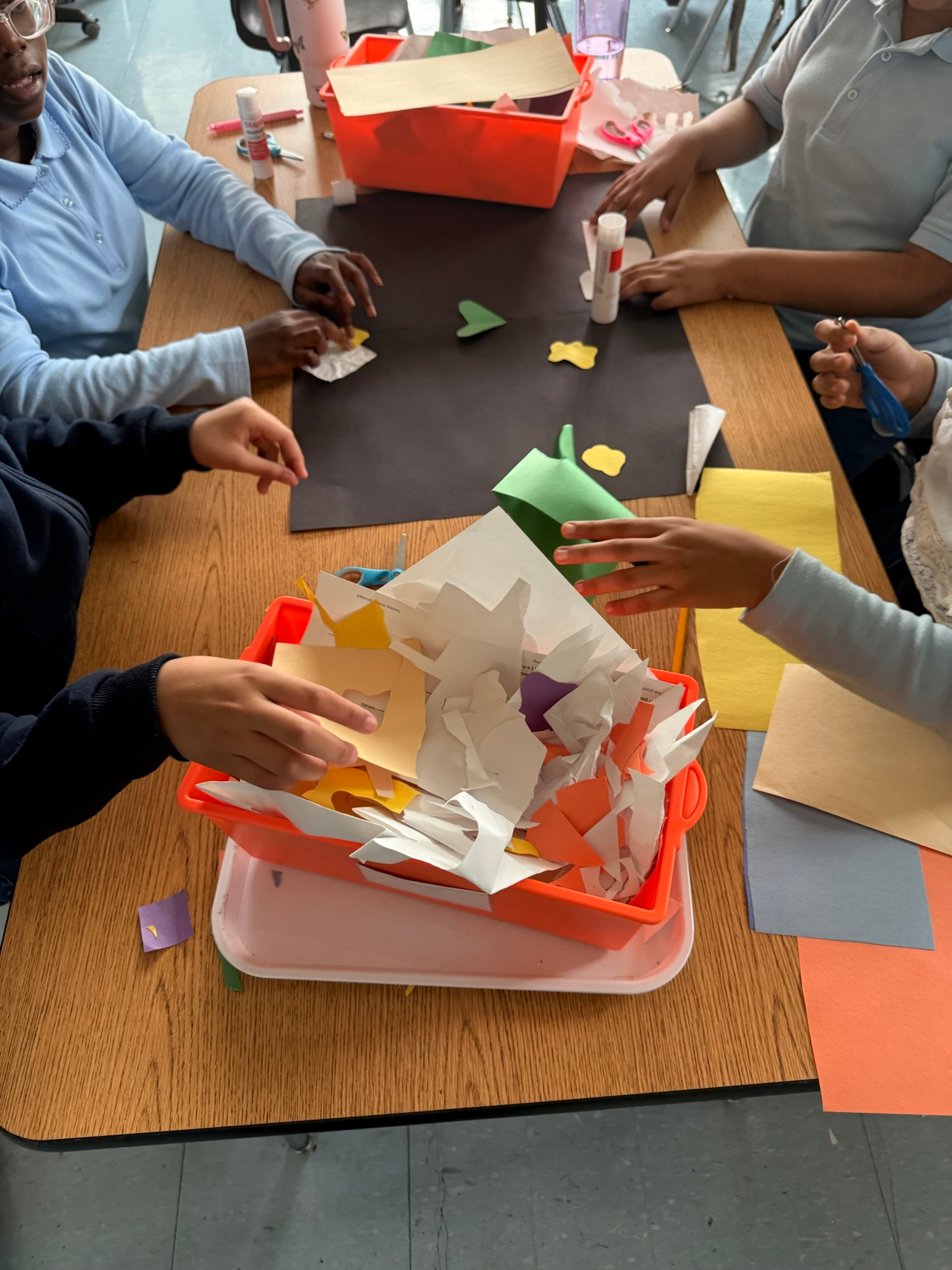
A student can have a strong idea and still get stuck before the work begins. The directions may disappear after a demonstration. A useful word may be available in one language but not another. A tool may make the intended action harder than it needs to be.
Planning for those moments starts with a precise question: what do we want the learner to understand or do? Once that goal is clear, we can change how students enter the task, find information, practice, or show what they know. The support should give them more access to the thinking and more control over their next move.
Consider a composition lesson. If the goal is to create a focal point, a learner might rearrange prepared shapes, use a larger surface, or explain a choice by pointing and speaking. The evidence still needs to show an intentional visual decision. If cutting technique is itself the goal, prepared shapes answer a different question. The learning target helps us decide what can change.
The accompanying toolkit organizes practical strategies around barriers teachers can observe: understanding the task, accessing language, getting started, using feedback, participating, and finding an appropriate challenge. Each entry includes a teacher move, an example, a check for learning, and a caution. Start with one support. Ask the learner what changed. Decide whether to keep it, adjust it, or try something else.
Explore the 36-strategy differentiation toolkit
These strategies draw on an inclusive-design framework and research-informed teaching guidance. Their evidence varies, and none is a guarantee for every learner. The aim is a more responsive planning habit: notice what the task demands, remove an unnecessary obstacle, and return to the learning.