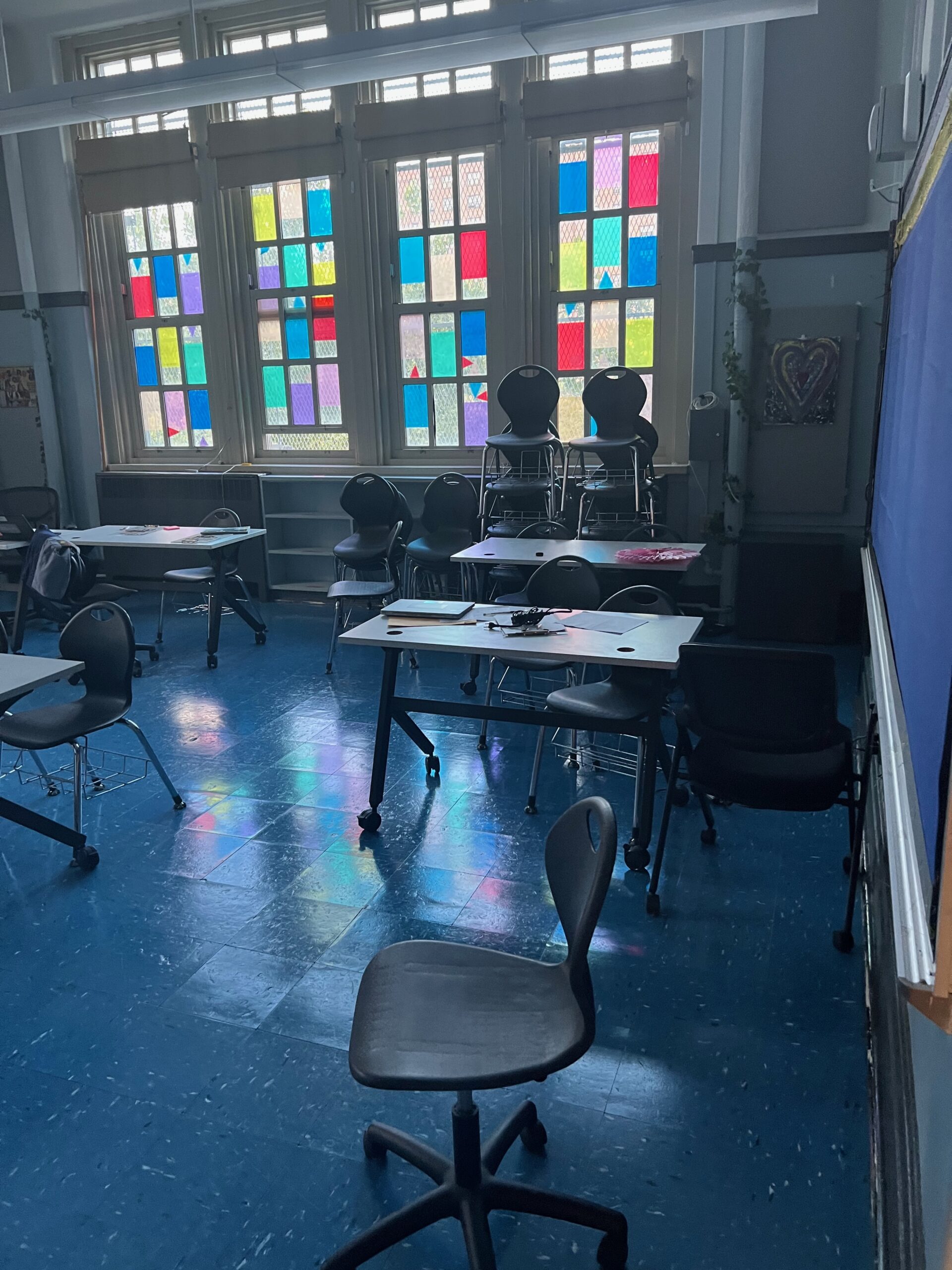
Welcome to the studio! This post is a tour of our art room for families, visitors, and anyone curious about what happens in here. It covers what you’ll see, how the space works, and the ideas behind it.
Our studio philosophy
This room is run like a working artist’s studio. Students aren’t here to copy a finished example; they’re here to think, experiment, make decisions, and reflect, the way artists do. The process matters as much as the product, and every student’s voice, identity, and story belongs in the work.
What you’ll see when you walk in
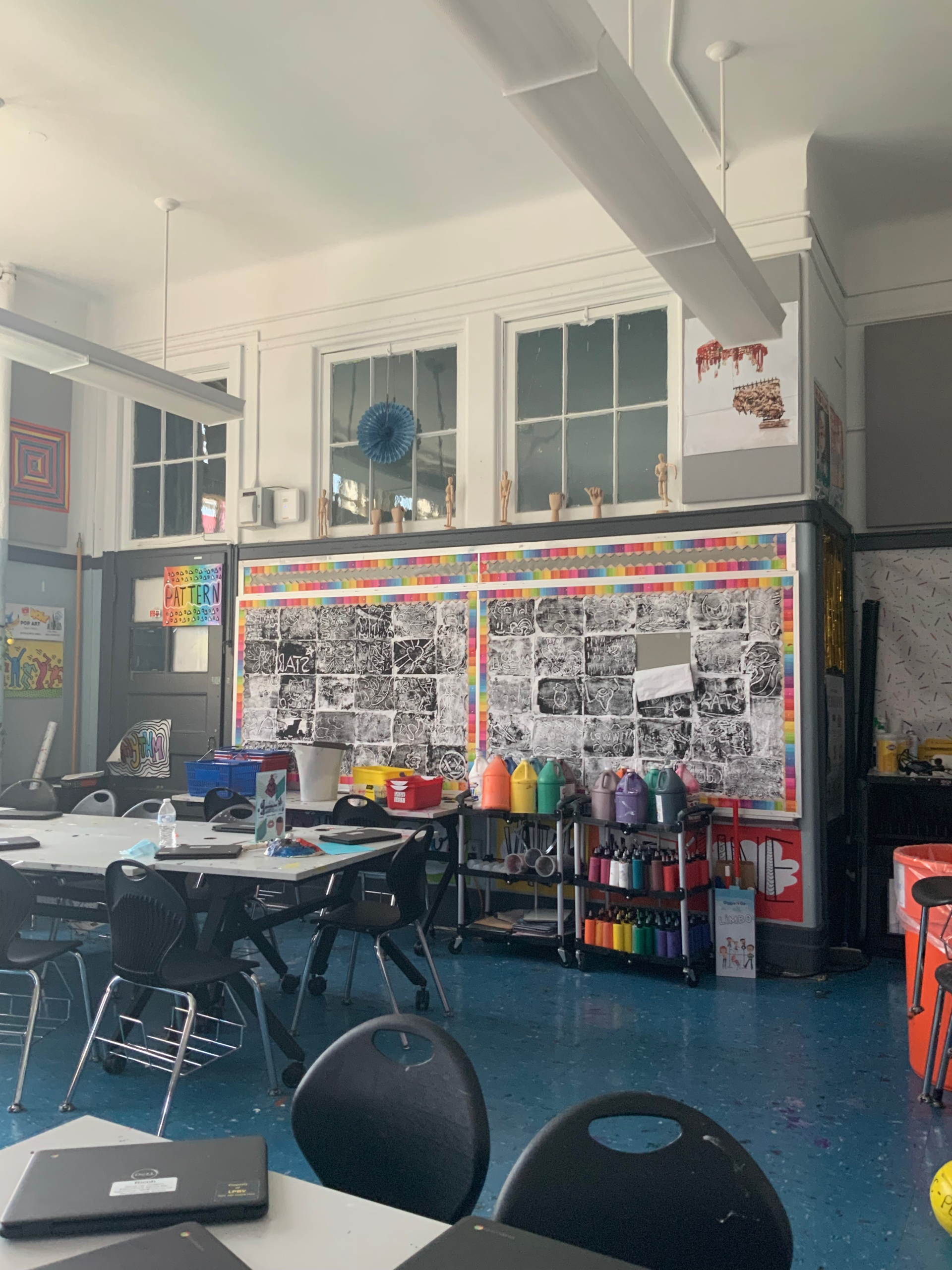
- Supply stations. Materials are organized and within reach so students can work independently and take ownership of their tools and their space.
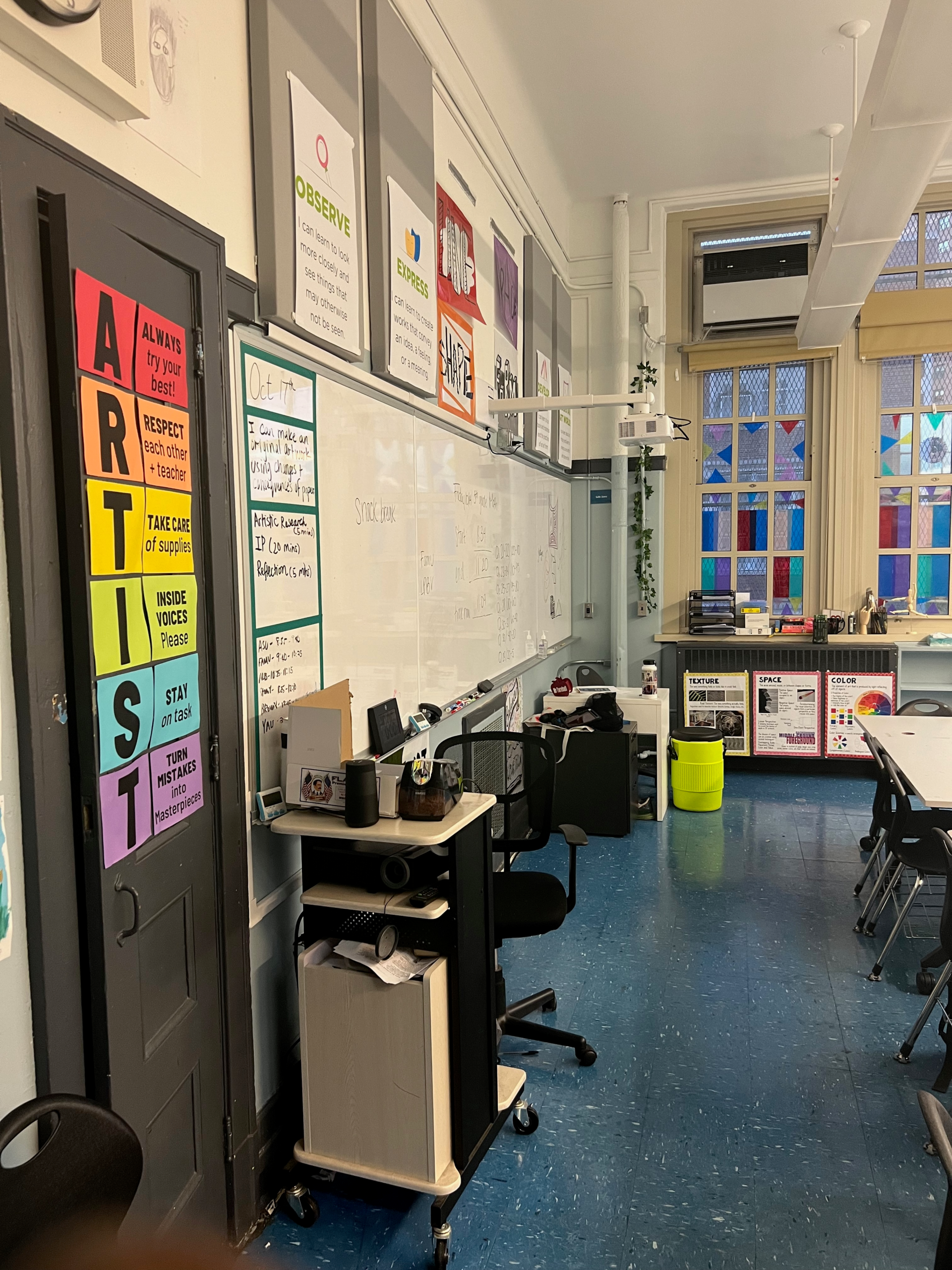
- Objectives boards. Each day’s learning goals are posted where everyone can see them, so students always know what they’re working toward and why.
- The ARTIST door poster. Our classroom expectations greet students before they even step inside.
- The “10 Lessons the Arts Teach” banner. Elliot Eisner’s reminder of what art education gives young people: that problems can have more than one solution, that small differences can have large effects, and that there are many ways to see and interpret the world.
- The Mood Meter. Students check in with how they’re feeling. Naming emotions is part of making art, and part of being ready to learn.
- The stained-glass window panels. Light, color, and student work, all in one place.
Classroom norms
A studio only works when everyone can trust the space and each other. Our norms are simple: respect the materials, respect each other’s work and ideas, stay curious, and keep going when it gets hard. These expectations are visible all over the room so they’re part of everyday conversation, not a list we read once in September.
Why the space matters
I believe students need to feel seen, valued, and safe before they can fully learn. That’s why so much care goes into this room. When the space is organized, colorful, and full of their own work, students get the message that this is their studio.
Families: you’re always welcome to come see it in person. And if you have questions about what your child is working on, send me a message.