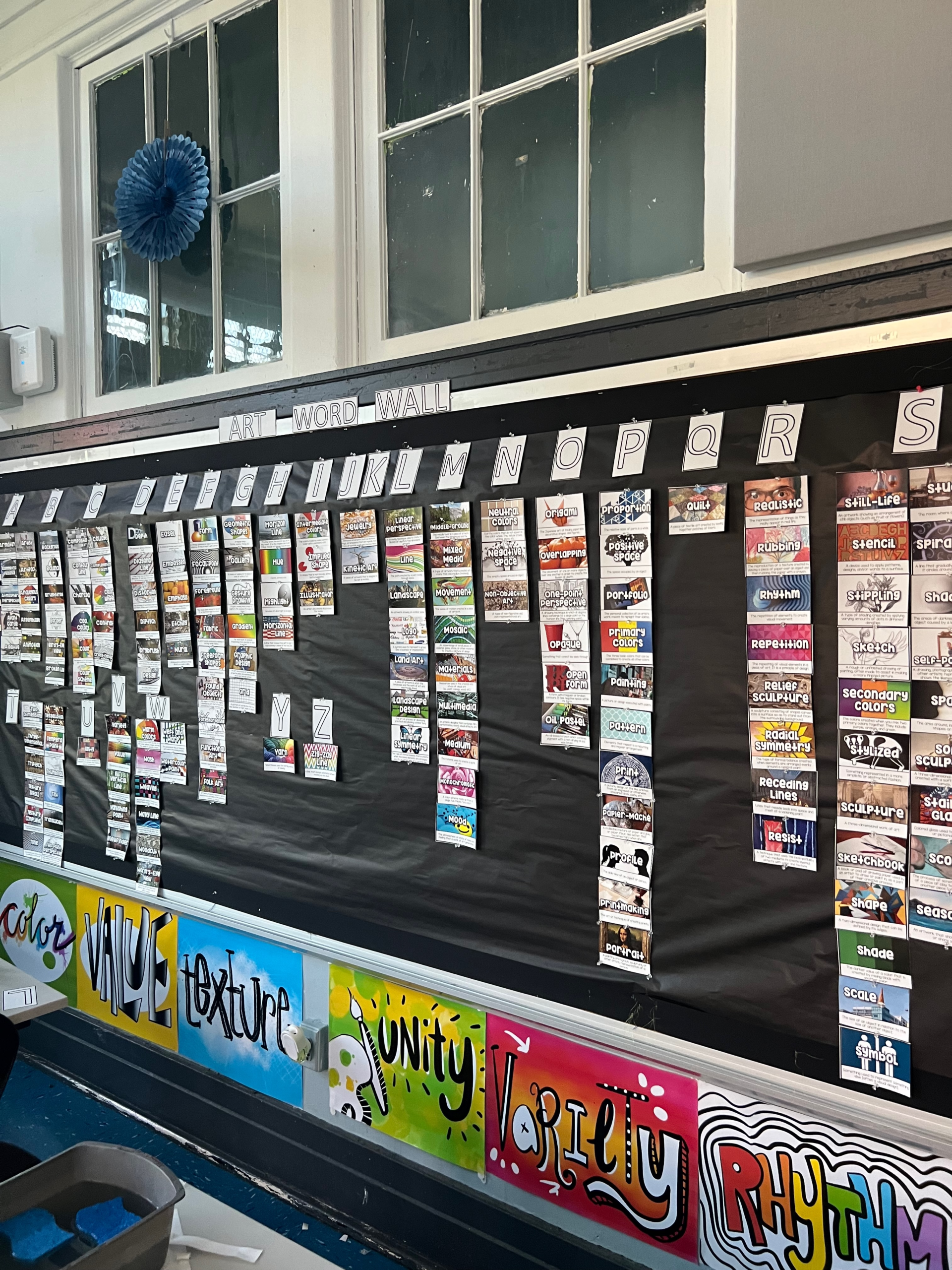
Students learn from everything in a room, not just from what the teacher says. Before a single lesson begins, the walls have already told them what matters here, what’s expected, and who belongs. So when I design my classroom, I treat the space as a co-teacher.
This is a look at how the IP Studio is set up and why each piece is there.
The word wall: a shared language
The art word wall runs the length of the room. Every term on it, from elements and principles to media and technique, is one students will actually use when they talk about their own work and each other’s. Literacy lives in the art room too. When the vocabulary is always visible, students don’t have to remember a word before they can use it. They can find it, point to it, and build sentences around it during critique.
Over time the wall stops being decoration and becomes a tool. Students start saying “contrast” instead of “it pops,” and that shift in language is a shift in thinking.
Studio Habits of Mind on the walls
The banners around the room come from the Studio Thinking framework, which names the habits of mind that working artists use. Three of them anchor our space:
- Engage & Persist: sticking with a problem, especially when the first attempt doesn’t work.
- Stretch & Explore: taking risks, trying the unfamiliar, and learning from “mistakes.”
- Envision: picturing what you can’t yet see and planning toward it.
Naming these habits matters. When a student is frustrated halfway through a project, I can point to Engage & Persist and we have a shared way to talk about what’s happening. It isn’t a behavior problem; it’s part of the artistic process.
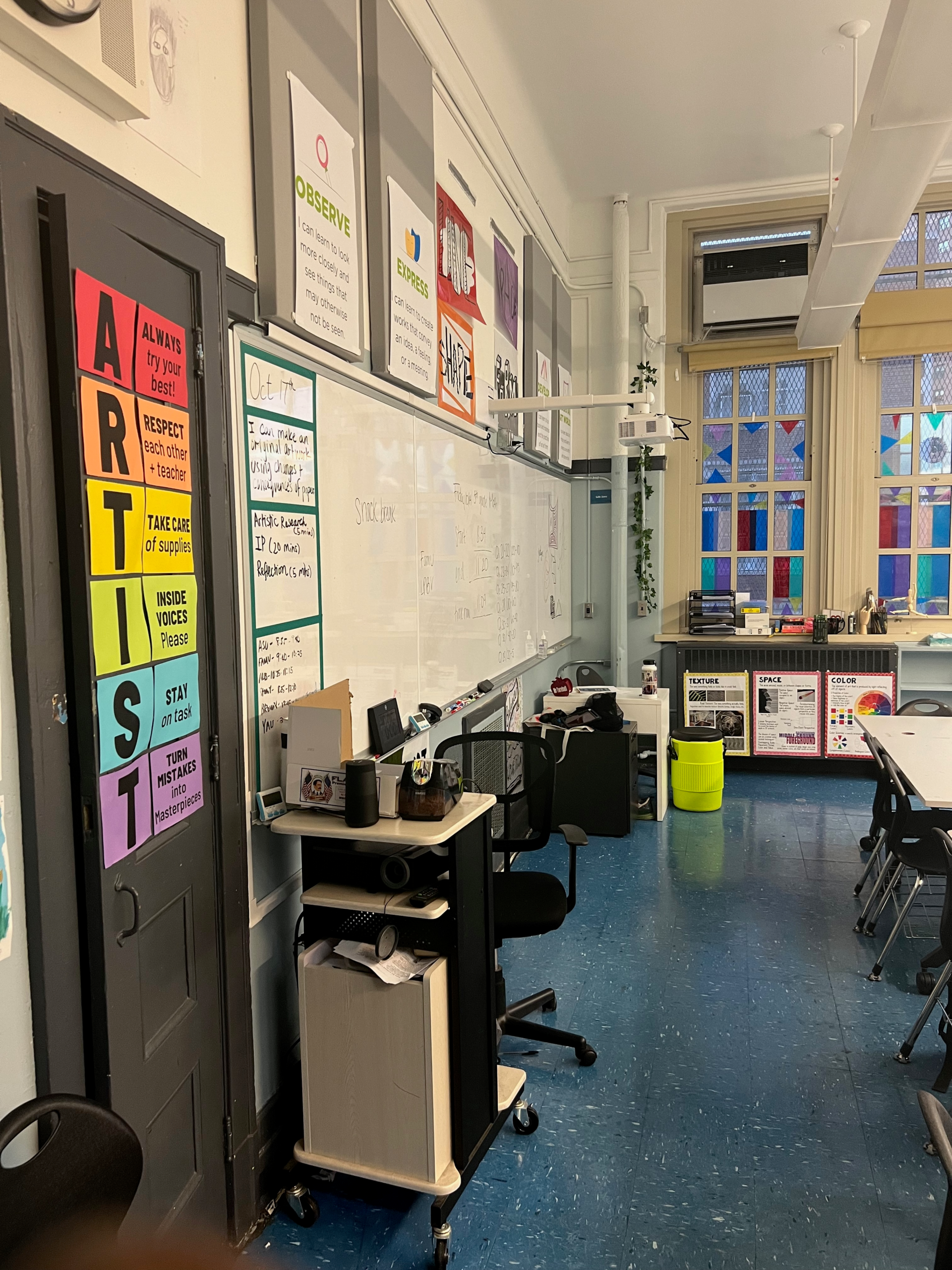
Expectations students can see
Our ARTIST expectations hang right by the door, next to the objectives board. Students see both on the way in, every day: how we treat each other and the space, and what we’re working toward in today’s lesson. Clear, consistent expectations aren’t about control. They make the room predictable enough that students feel safe enough to take creative risks.
A room that says “you’re an artist here”
The label on the wall says IP Studio, not “Art Room.” That’s deliberate. A studio is where artists work. Calling it that tells students what role they’re stepping into when they walk in: not students who are taking art, but artists doing the work.
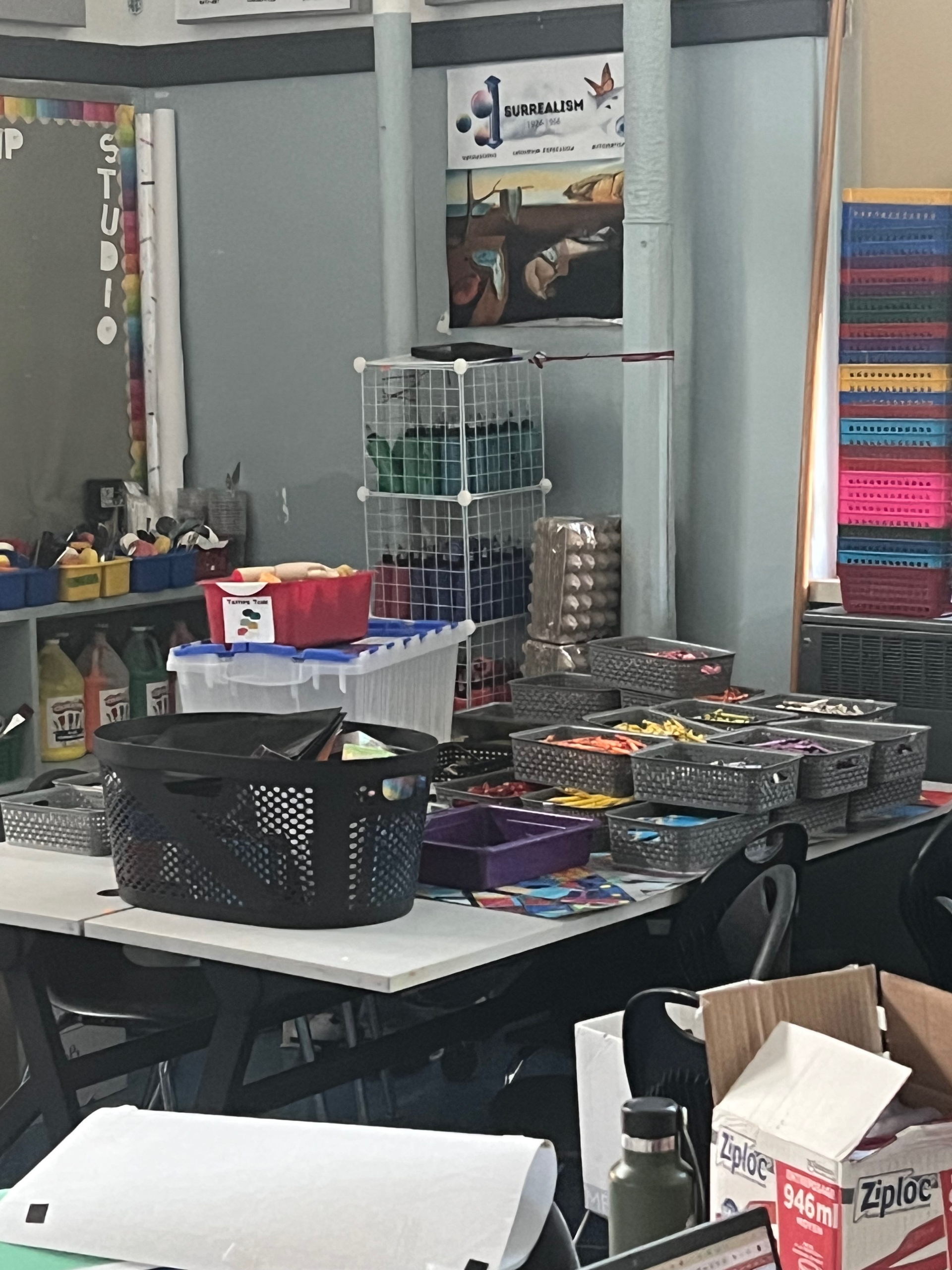
Belonging comes before learning. The walls are one of the first places students look to find out whether they belong.
Every wall teaches something. The question is whether we’ve decided what it teaches. In the IP Studio, I want the answer to be: you think like an artist, you have the language to say so, and this space was built for you.