Paper Animals: Changes and Attachments
Free to teach, adapt and share in your classroom.
- Grade 3–6 (proposed)
- Subject Visual Arts
- Duration 4 sessions · 45 min
- Instructor Mr. George
Overview
Unit Context: Paper as a sculptural material · changes, attachments and a free-standing paper animal · no tape, no staples
Big Idea
A flat sheet becomes form through what our hands do to it. Students invent ten ways to change paper and eight ways to attach it without tape or staples, then use those discoveries to build a fierce or gentle animal that shows its character through form alone.
The central question is: How can a flat material become a creature with a personality?
The animal is made from one color of paper with no printed text, so color cannot do the work. Fierceness or gentleness has to come from the folds, curls, edges and stance. The final test is physical: when the animal is held upside down, it should not fall apart.
Planning status: This lesson is developed from KC George’s 2021 materials-and-methods paper explorations, which set the three challenges but no pacing. The four-session pacing and teacher prompts below are a proposed adaptation, not a report of a taught unit. Material lists from the original that are unsafe for a classroom (burning paper, tasting paper, and paper placed over a light bulb) are excluded here.
Unit at a Glance
| # | Session and goal | Time |
|---|---|---|
| 1 | Ten ways to change paperInvent and name ten ways to change a flat sheet of paper. | 45 min |
| 2 | Eight ways to attach paperJoin paper to paper in eight ways without tape or staples. | 45 min |
| 3 | A fierce or gentle animalUse my changes and attachments to build an animal whose character shows in its form. | 45 min |
| 4 | The upside-down test and a finishTest, refine and present my paper animal. | 45 min |
| 4 sessions | 180 min |
NYS Visual Arts Standards Alignment
Suggested alignment for the proposed grade band. Confirm the exact indicator wording for your grade.
- VA:Cr1.2 (grades 3–6) Creating: investigating a material through play and invention. The changes and attachments samplers.
- VA:Cr2.1 (grades 3–6) Creating: experimenting with materials and approaches to build an idea. The animal build.
- VA:Cr3.1 (grades 3–6) Creating: revising work after a test. The upside-down test and the stance check.
- VA:Re8.1 (grades 3–6) Responding: interpreting how form conveys mood. Reading fierce or gentle from shape alone.
Instructional Outcomes (Objectives)
- Studio / Experiential Students will invent and name ten changes and eight tape-free attachments, then use at least five changes and three attachments to build a free-standing paper animal.
- Cognitive / Analytical Students will explain how specific folds, edges and stance make their animal read as fierce or gentle.
Key Vocabulary
- Fold / crease / score Bend paper; press a sharp line; dent a line first so it folds cleanly.
- Pleat Folding back and forth like a fan.
- Curl / roll / twist Bending paper into curves or tubes.
- Fringe / shred Many cuts along an edge, or tearing into strips.
- Tab and slot A tongue of paper that pushes through a cut to lock two pieces.
- Hinge A folded flap that lets one piece move against another.
- Insert / weave / wrap / tie Ways to join paper to paper without tape.
- Form / stance A three-dimensional shape, and the way it stands.
Materials & Resources
- Paper for sampling: half sheets of 12 × 18 construction paper, at least six per student.
- Paper for the animal: one 12 × 18 sheet in a single color with no text, plus spares of the same color.
- Tools: scissors, including left-handed and adapted pairs; pencils and rulers for scoring; glue sticks as one of the eight attachments.
- Changes chart posted, with verbs only: fold, crease, score, pleat, roll, curl, twist, crimp, crunch, fringe, shred, rip, cut, poke.
- Attachments chart posted: tab and slot, hinge, insert, weave, wrap, tie, twist together, poke through, glue.
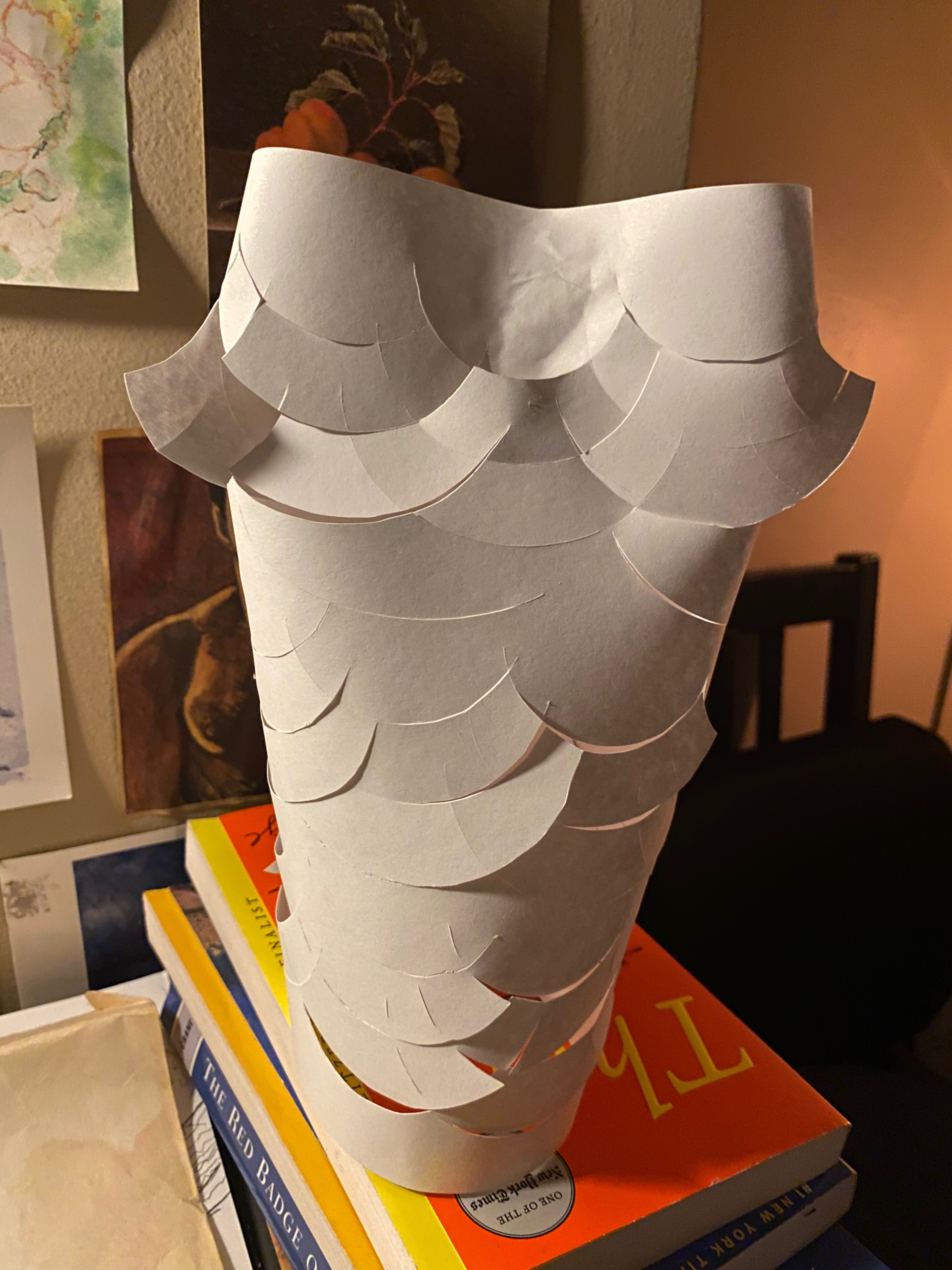
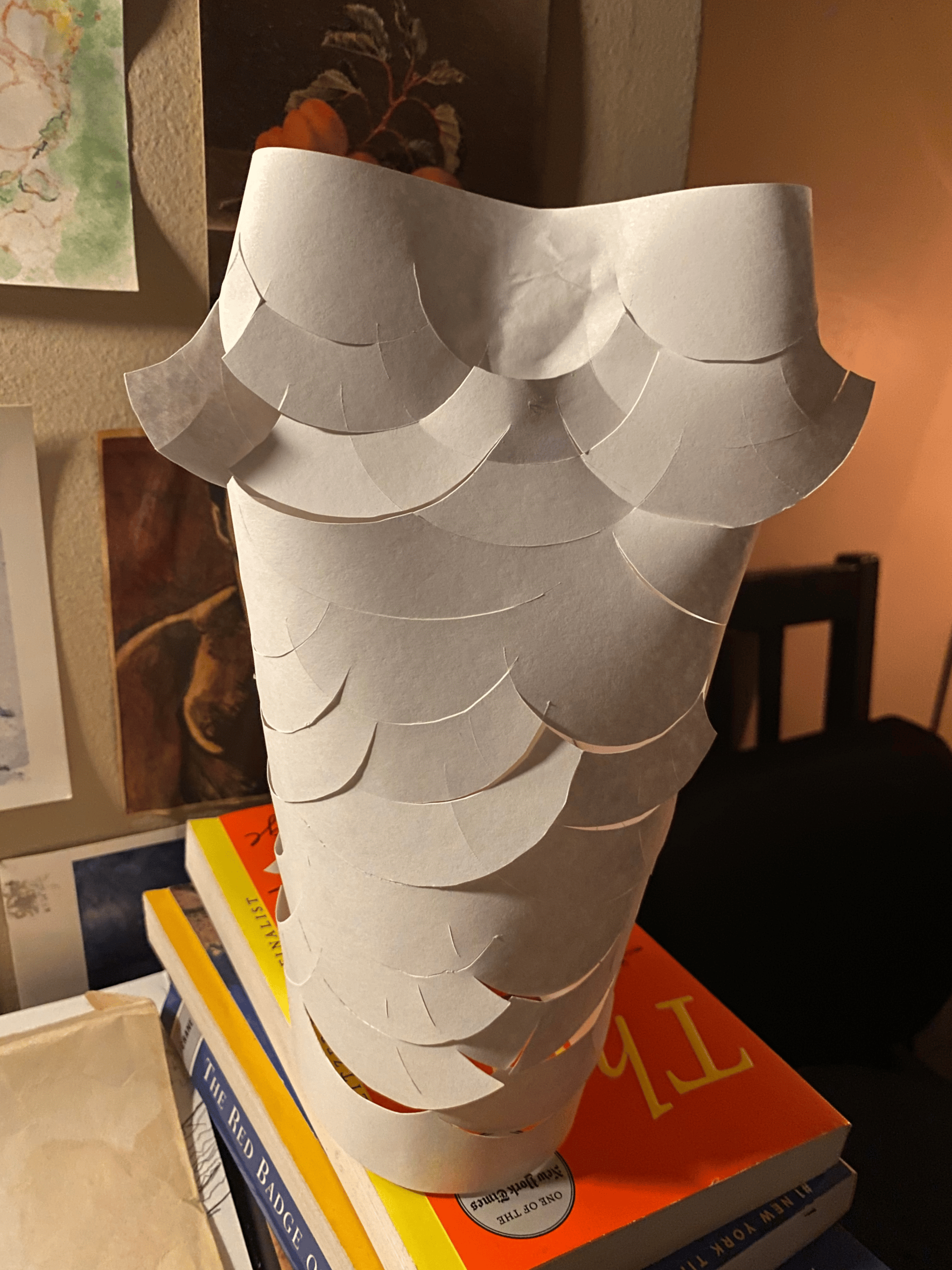
- Teacher exemplars: a changes sampler, an attachments sampler and the owl.
- Storage: a named folder or tray per student; animals stored standing up or in boxes.
Safety: scissors are carried closed and pointed down. Paper is never burned, tasted or put near light bulbs or heaters. No tape or staples are used in the animal, which also removes staple injuries.
Differentiation
- Fine-motor supports Pre-scored fold lines, wider strips for curling, pre-cut tabs and slots to practice with, and adapted scissors. Tearing counts as a change.
- Multilingual learners The changes and attachments charts pair each verb with a photographed sample. Students label samplers with the verb word, a sketch or both.
- Social-emotional Fierce or gentle is the student’s choice, and any animal, real or invented, is welcome. A collapse in the upside-down test is information, not failure.
- Extension Build a habitat for the animal in a shoebox, using only paper changes, or add a second animal that contrasts in character.
Anticipated Misconceptions
Misconception Character comes from color or a drawn face.
Intervention Hold up two strips, one with a sharp zigzag fringe and one with soft curls, and ask which is fierce. Mood can live in edges and curves.
Misconception Glue holds everything.
Intervention Glue is only one of eight attachments. A tab and slot or a hinge often holds better and lets parts move.
Instructional Sequence
Four proposed 45-minute sessions: entry (0–5), demo (5–12), studio (12–33), share (33–38) and reset (38–45). The samplers made in Sessions 1 and 2 are the toolbox for the animal in Sessions 3 and 4.
Session 1Ten ways to change paper
45 min
Today, I can… invent and name ten ways to change a flat sheet of paper.
Materials today: Half sheets of construction paper, scissors, pencils and rulers, the changes chart and the teacher sampler.
Do Now: one sheet, one change
Hand every student one strip at the door.
“Change this strip without scissors. You have one minute. What did you do to it?”
Demo: same paper, new form
Name student changes on the chart, then demo three they did not try: score and fold, pleat, fringe.
“Score first, then fold. Watch how clean the line becomes.”
Studio: the changes sampler
Students make ten changes on separate strips and glue each to a sheet, labeled with its verb.
“Ten different changes, not ten folds. Which verb have you not tried yet?”
Check: Each sampler shows ten different, labeled changes.
Share: which change surprised you?
Pairs swap samplers and point to one change they want to borrow.
“Which change made the paper strongest? Which made it softest?”
Reset
Scraps sorted into a shared tray, scissors counted back, samplers and animals stored in named folders or boxes.
“Keep every test. Your sampler is your toolbox for next time.”
Session 2Eight ways to attach paper
45 min
Today, I can… join paper to paper in eight ways without tape or staples.
Materials today: Paper strips, scissors, glue sticks, the attachments chart and the teacher sampler.
Do Now: join two strips
“Join these two strips without tape, staples or glue. What held?”
Demo: tab and slot, hinge, weave
Demonstrate a tab and slot, a folded hinge and a two-strip weave. Pull gently on each to test it.
“A good attachment holds when you pull it, not just when you set it down.”
Studio: the attachments sampler
Students make eight attachments, each tested with a gentle pull, and label each one.
“Glue counts as one of your eight. Find seven more.”
Check: Eight labeled attachments that survive a gentle pull.
Share: the strongest join
Each table chooses its strongest attachment and shows it.
“Why did that one hold? What did the paper do?”
Reset
Scraps sorted into a shared tray, scissors counted back, samplers and animals stored in named folders or boxes.
“Keep every test. Your sampler is your toolbox for next time.”
Absent last time? Start with a quick changes sampler of five strips; the shared sampler wall lets you borrow any change you missed.
Session 3A fierce or gentle animal
45 min
Today, I can… use my changes and attachments to build an animal whose character shows in its form.
Materials today: One sheet of single-color paper with no text per student, spares of the same color, samplers, scissors, the owl exemplar.
Do Now: five words
“Choose an animal, real or invented. Write five words for how it moves or feels. Circle fierce or gentle.”
Demo: character from form
Show the owl. Ask what changes and attachments built it. Hold up a sharp fringe and a soft curl side by side.
“No color, no drawn face. How will someone know your animal is fierce or gentle?”
Studio: build the body first
Students build the main body form first, then legs or base so it stands, then character details. Rules: one color, at least five changes, at least three attachments, no tape or staples.
“Body first, then stance, then the details that carry the mood.”
Check: By minute 33, every animal has a body and can stand or sit.
Share: read it from across the table
Neighbors guess fierce or gentle without being told, and point to the evidence.
“What made you guess fierce? Point to it.”
Reset
Scraps sorted into a shared tray, scissors counted back, samplers and animals stored in named folders or boxes.
“Keep every test. Your sampler is your toolbox for next time.”
Absent last time? Start with a quick changes sampler of five strips; the shared sampler wall lets you borrow any change you missed.
Session 4The upside-down test and a finish
45 min
Today, I can… test, refine and present my paper animal.
Materials today: Animals in progress, samplers, spare paper, title cards.
Do Now: predict the test
“Which part of your animal will fall off when it is upside down? Write it before you test.”
Demo: the test
Hold the teacher exemplar upside down and gently shake it once. Show how to reinforce a weak joint with a second attachment.
“If it falls apart, that part needs a stronger attachment, not more glue.”
Studio: test, fix, refine
Students run the upside-down test, reinforce weak joints, then refine one detail that strengthens the character. Ready students start a paper habitat.
“Test again after every fix.”
Check: The animal survives the upside-down test.
Share: gallery and title
Students add a title card naming the animal, fierce or gentle, and one change that shows it.
“Which change carries your animal’s character?”
Reset
Scraps sorted into a shared tray, scissors counted back, samplers and animals stored in named folders or boxes.
“Keep every test. Your sampler is your toolbox for next time.”
Exit Ticket Prompt
Name one change and one attachment in your animal, and explain how each one helps it look fierce or gentle.
Assessment & Reflection
- Exploration Ten different, labeled changes and eight attachments that hold.
- Character through form The animal reads as fierce or gentle without color or a drawn face, and the student can point to why.
- Construction At least five changes and three attachments, no tape or staples, and it survives the upside-down test.
- Reflection The student names a weak joint they fixed and how.
Related Lessons
Form, Nature and Meaning: Cardboard Relief builds on the same attachment skills with cardboard. Places We Call Home uses paper as a collage material.
Sources & Credits
Explorations: Kacy George, materials-and-methods paper explorations, 2021 (changes, attachments, and a fierce or gentle paper animal). Proposed pacing, prompts and safety notes adapted for this page in 2026. Teacher exemplar: Kacy George, Owl, 2021.