A constraint that opens a question
In the paper-animal project described in my teaching portfolio, students build freestanding forms with paper, folds and tab-and-slot joinery. Removing tape from the first attempt keeps the structural problem available for investigation.
When a join fails, the next question is concrete. Does the slot need to change? Is the base too narrow? Would a fold stiffen the surface? The material gives feedback that the learner can test.
Look at the construction
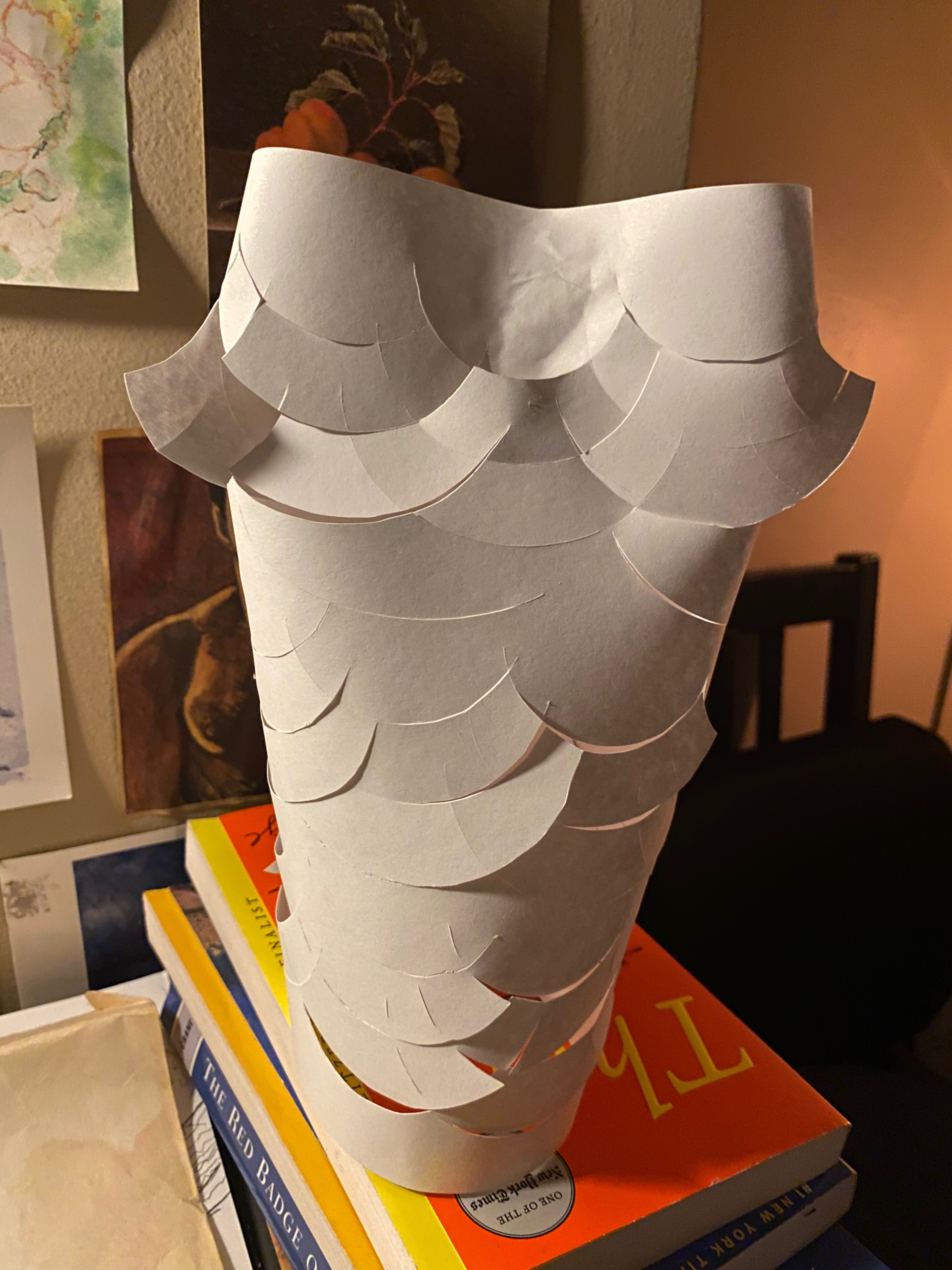
The paper studies pictured here make folds and overlapping edges visible. A layered surface can carry an image and build volume at the same time. An animal form also asks the maker to consider balance, weight and the points that touch the surface beneath it.
These photographs illustrate material exploration. They do not document a complete before-and-after sequence for one student. The teaching question is what a learner can discover by comparing one structural choice with another.
Prototype before adding detail
I teach joins before expecting a complex form. A small test can show whether a tab holds, whether a scored fold changes stiffness and whether a base supports the intended shape. A failed prototype is information the learner can use.
Detail becomes meaningful when the structure can carry it. Students can then decide how a repeated fold, a scalloped layer or an extended plane contributes to the animal’s form.
Keep the assessment visible
I ask learners to explain a structural decision with the object in front of them. Can they show what holds it up? Can they point to a change that improved stability? Can they identify the next test?
Supported cutting, larger pieces or a teacher-assisted fold can preserve access while leaving the design decision with the learner. The goal is structural thinking, not a test of who can manipulate the smallest piece fastest.
This paper challenge is distinct from the shallow cardboard relief toolkit, which allows appropriate adhesive for attached layers. A useful constraint belongs to a particular learning problem; it does not have to become a rule for every sculpture.
