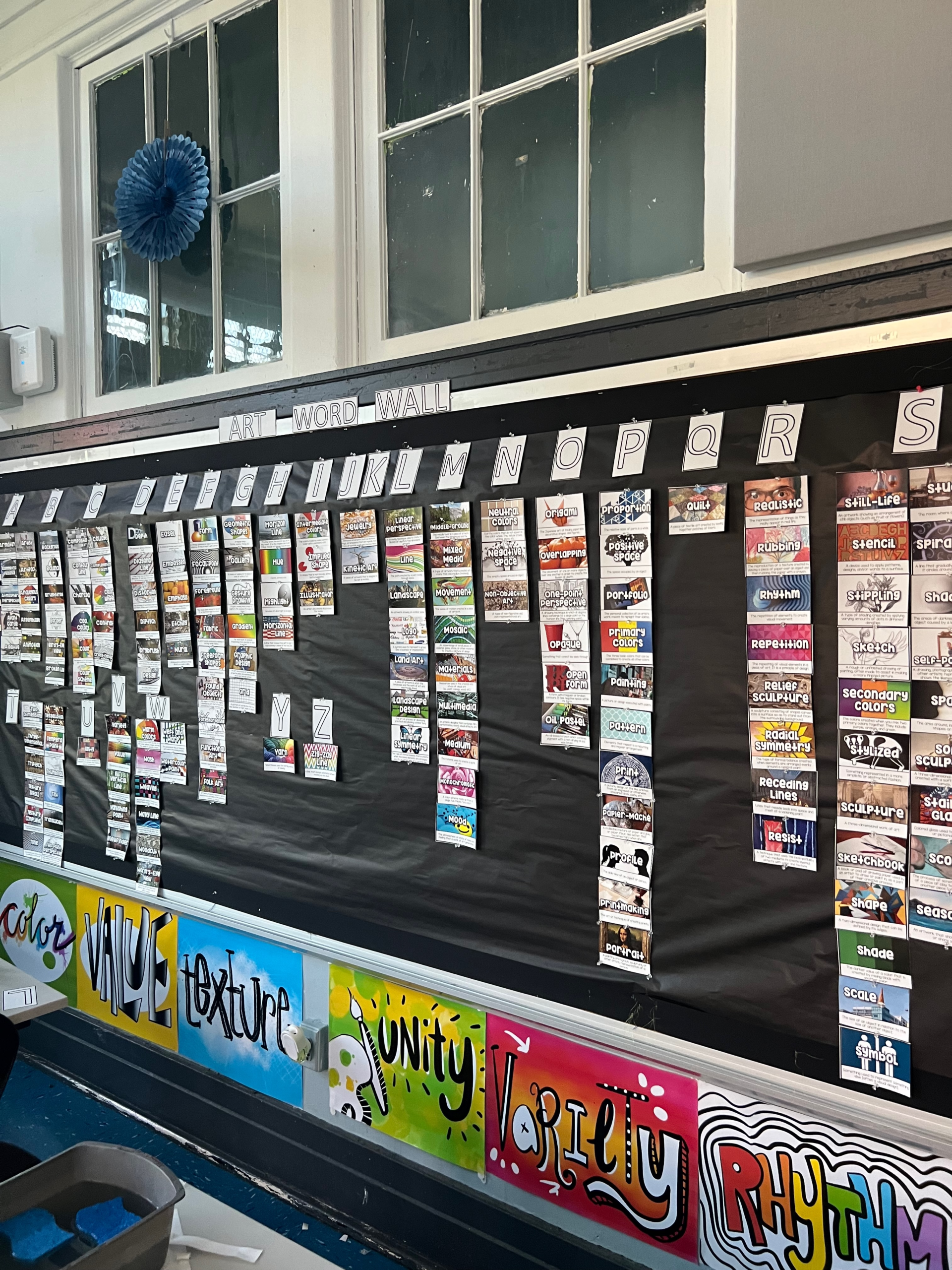
A word that can be used
An illustrated art word wall is useful when a learner can return to it during making. A term such as value, texture or rhythm needs an example that can be seen and a decision that can be tried. The wall gives that language a stable place in the room.
My teaching portfolio describes the wall as a living dictionary. Cards grow with the studio’s vocabulary rather than arriving as a finished display disconnected from the projects.
From the card to the artwork
During critique, a learner can point to a term, find its effect in the artwork and explain the connection. “There is texture” becomes more precise when the speaker can show where a rough edge changes the surface or where a repeated mark creates movement.
The word is a tool for looking. It should help the learner notice something they can then use, change or discuss. A definition alone cannot do that work.
Design for return visits
The systems playbook pairs words with icons and visible examples. The same principle supports storage labels: a learner should be able to recognize what a label asks them to do. Consistency matters when the room is busy and attention is divided.
A multilingual learner may recognize the visual example before retrieving the English term. Pointing, comparing and trying an effect can prepare a more precise explanation. The intellectual demand remains in the observation and choice.
Keep it connected to the work
I want vocabulary to appear in a conversation about an actual decision: where the eye lands, how two shapes relate, or what a material does. A learner can test a term by changing the work and seeing whether the effect changes.
The room photograph below shows the larger studio environment in which these supports live. The wall is one part of a system of reference points, materials and routines that helps students return to the work with greater independence.
